Emergency Plumbing Help Available 24/7
Tankless vs. Traditional Water Heaters: The Real Cost Breakdown
Understanding How Each System Works
The difference between tankless and traditional water heaters comes down to one fundamental question: how is hot water made available when you turn on the tap?
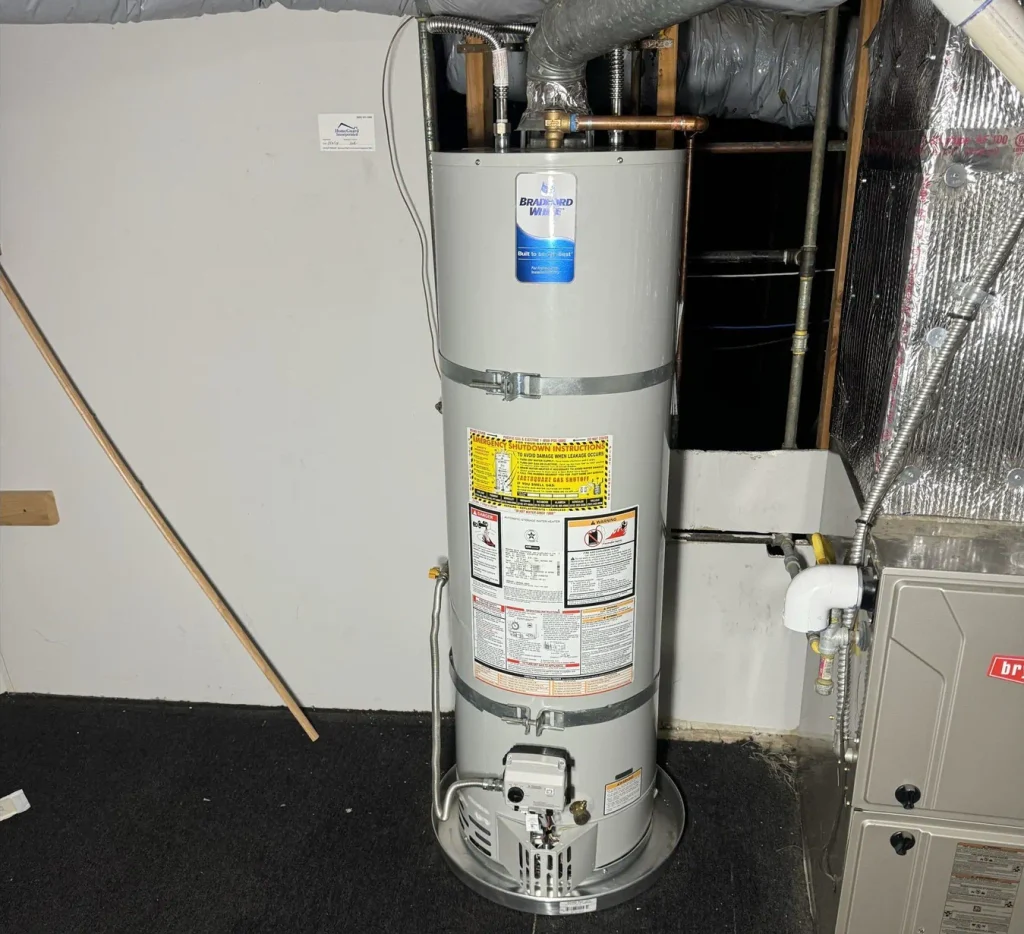
Traditional water heaters, also called tank or storage water heaters, keep 30 to 80 gallons of water heated around the clock in an insulated tank. A gas burner or electric heating element cycles on and off to maintain the set temperature. When you turn on the hot water tap, the stored hot water flows out, and cold water enters the bottom of the tank to be heated. This continuous heating happens whether you’re using hot water or not, which creates what’s known as standby heat loss.
Tankless water heaters take a different approach. Instead of storing hot water, they heat water on demand as it flows through the unit. When you turn on a hot tap, cold water enters the tankless heater and passes over a powerful gas burner or electric heating element. The water is heated instantly to your desired temperature and delivered directly to your faucet, shower, or appliance. Once you close the tap, the heating stops.
For Oakland homeowners, this distinction matters in several practical ways. Traditional tanks are simple, familiar technology that most plumbers can service. Tankless systems are more complex but can supply endless hot water without waiting for a tank to refill and reheat. In older Oakland homes with limited space, the compact size of a tankless unit (typically wall-mounted) offers installation flexibility that a bulky 50-gallon tank can’t match. Understanding these operational differences is the first step in determining which system fits your household’s needs and budget.
What You’ll Pay Upfront: Installation and Equipment Costs
When comparing water heater replacement cost, the initial investment differs significantly between the two systems.
A traditional tank water heater typically costs between $800 and $1,800 for the unit itself, depending on capacity and energy efficiency rating. Installation labor in the Oakland area generally adds another $400 to $800, bringing the total project cost to $1,200 to $2,600. If your existing plumbing and venting are in good shape and meet current code, installation is usually straightforward. However, older Oakland homes built before modern plumbing codes may need upgrades to gas lines, venting, or expansion tanks, which can add $200 to $600 to the project.
Tankless water heater installation cost runs higher. The unit alone typically ranges from $1,000 to $3,000, and installation labor can add $1,200 to $3,500, for a total project cost of $2,200 to $6,500. Why the difference? Tankless installation often requires more extensive work. Gas-powered tankless units need larger gas lines than traditional tanks because they consume more gas during operation (even though they run for shorter periods). In many Oakland homes, this means upgrading the gas line from the meter. Tankless units also require different venting systems, often stainless steel instead of standard B-vent, and electrical upgrades even for gas models (they need power for ignition and controls).
Electric tankless models avoid gas line upgrades but may require electrical panel upgrades and new dedicated circuits, especially in older homes. Permits are typically required for both types in Oakland, but tankless installations trigger more inspections due to the complexity.
Location matters too. If you’re replacing an existing tank with another tank in the same spot, costs stay lower. If you’re switching from tank to tankless or relocating the unit to save space, expect higher costs for new plumbing runs, venting, and gas line routing. When budgeting for water heater installation, get multiple quotes that include all materials, labor, permits, and code-compliance work.
Operating Costs and Energy Efficiency Over Time
The higher upfront tankless water heater installation cost can be offset by lower monthly energy bills, but the payback period depends on your household’s hot water usage.
Traditional tank water heaters constantly cycle on and off to keep stored water hot, even when you’re asleep or away from home. This standby heat loss typically accounts for 10% to 20% of the unit’s total energy consumption. A typical household spends $400 to $600 per year operating a standard tank water heater. High-efficiency tank models with better insulation and more efficient burners can reduce that to $350 to $500 annually.
Tankless water heaters eliminate standby heat loss by heating water only when you need it. According to energy efficiency studies, tankless systems are 24% to 34% more efficient for households that use 41 gallons or less of hot water daily, and 8% to 14% more efficient for households using around 86 gallons per day. For most Oakland households, this translates to annual operating costs of $250 to $400, a savings of $100 to $200 per year compared to a traditional tank.
However, real-world efficiency depends on usage patterns. If your household takes several showers simultaneously or runs multiple appliances at once, a single tankless unit may struggle to keep up, causing you to install multiple units or a larger model, which increases both installation and operating costs. Traditional tanks deliver their full capacity at once but then require 30 to 60 minutes to reheat, which can be frustrating during high-demand periods.
The payback calculation is straightforward: if you spend an extra $3,000 on tankless installation and save $150 per year in energy costs, you’ll break even in 20 years. If you save $200 annually, the payback drops to 15 years. Given that tankless units typically last 20+ years and tanks last 10 to 15 years, the long-term economics often favor tankless, especially if you’re planning to stay in your Oakland home long-term. Natural gas prices in the Bay Area also affect this calculation, so consider local utility rates when running your numbers.
Lifespan, Maintenance Requirements, and Reliability
Durability and maintenance needs differ sharply between these two systems, and those differences affect your total cost of ownership.
Traditional tank water heaters typically last 10 to 15 years with proper maintenance. The tank itself is the limiting factor because sediment buildup, corrosion, and mineral deposits gradually weaken the steel lining, even with a protective anode rod. In the Bay Area, where water hardness varies but tends to be moderate, sediment buildup is a common issue. Annual flushing to remove sediment extends tank life, but many homeowners skip this maintenance. When a tank fails, it often leaks, which can cause water damage if not caught quickly. Repairs during the tank’s lifespan are usually inexpensive (replacing thermostats, heating elements, or anode rods typically costs $150 to $400), but once the tank itself corrodes, the entire unit must be replaced.
Tankless water heaters last significantly longer, typically 20 years or more, because they don’t store water and thus avoid the corrosion issues that plague tanks. However, they require more frequent maintenance. Tankless units should be flushed and descaled annually to prevent mineral buildup on the heat exchanger, especially in areas with hard water. This service typically costs $150 to $250 if you hire a plumber, though some homeowners do it themselves with a descaling kit. Skipping this maintenance reduces efficiency and can lead to costly repairs. Component failures (ignition systems, sensors, circuit boards) are more common with tankless systems and can cost $200 to $600 to repair, but these failures don’t usually mean replacing the entire unit.
Warranty coverage also differs. Traditional tanks typically come with 6 to 12-year warranties on the tank and shorter warranties on components. Tankless units often carry warranties of 10 to 15 years on the heat exchanger and 5 years on parts. If you need emergency water heater repair, traditional tanks are simpler and parts are widely available, meaning faster service. Tankless repairs may require specialized parts and knowledge, though licensed plumbers familiar with the major brands (Rinnai, Navien, Rheem) can handle most issues. When factoring in lifespan, a tankless unit that lasts 20 years effectively costs half as much per year as a tank that lasts 10 years, even with higher upfront and maintenance costs.
Choosing the Right System for Your Oakland Home
So which system makes sense for your home? The answer depends on several factors: your budget, household size, space constraints, and how long you plan to stay in your home.
Traditional tank water heaters make sense if you need to minimize upfront costs, your home already has the necessary infrastructure in place, or you prefer proven, simple technology. They’re a solid choice for smaller households with predictable hot water needs and for homeowners who don’t plan to stay in the home long enough to recoup the higher cost of a tankless system. If you’re on a tight budget or need a quick replacement, a traditional tank gets you back to hot showers without a major financial commitment.
Tankless water heaters are worth the investment if you value energy efficiency, have high or variable hot water demand (large families, multiple bathrooms), need to save space, or plan to stay in your home for many years. They’re also a smart choice if you’re already doing other upgrades that require permits and contractor work, since you can bundle the installation. For Oakland homeowners renovating older homes or adding bathrooms, a tankless system offers flexibility and long-term savings.
Before making a decision, consider getting a professional assessment. A qualified plumber can evaluate your existing plumbing, gas lines, electrical capacity, and water usage to recommend the right size and type of system. In Oakland’s older housing stock, existing infrastructure often dictates which option is more practical and affordable. Upgrading from a 40-gallon tank to a 50-gallon tank might cost $1,800, while switching to tankless could cost $4,500 if extensive gas line and venting work is needed.
When you’re ready to move forward, choose a licensed, insured plumber who’s familiar with both systems and local code requirements. Same-day appointments can help you get a quote quickly, and having access to 24/7 emergency service matters if your current water heater fails unexpectedly. Whether you choose tankless or traditional, proper installation and regular maintenance will maximize your investment and keep hot water flowing reliably for years. If you’d like to discuss which system fits your home and budget, get in touch to schedule a consultation and get a detailed quote tailored to your specific situation.